
Urban Landscape Photography: A Guide to Shooting Cityscapes
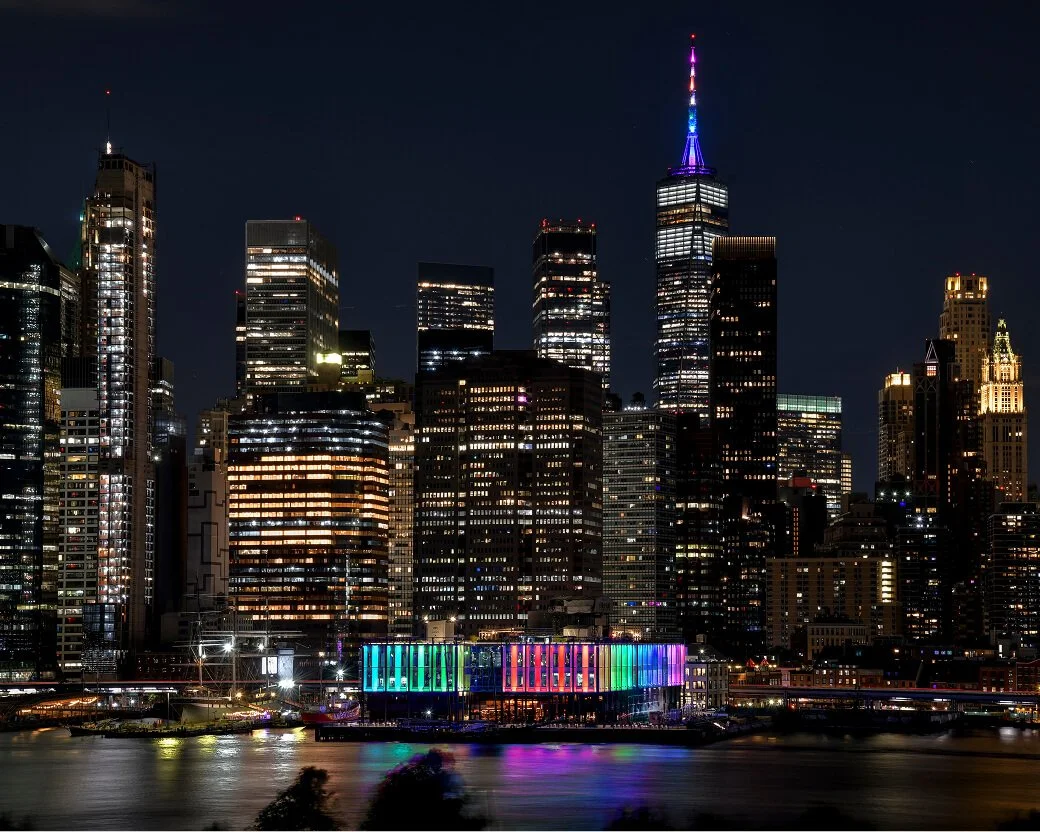
The first time I pointed my camera toward a living city, it felt… loud. Unpredictable. Alive in a way abandoned spaces aren't. I was walking through the cobblestone streets of SOHO in NYC. Cars passed through my frames. People interrupted my compositions. Light bounced, shifted, reflected, and disappeared faster than I could anticipate. But something surprising happened. The more I leaned into it, the more familiar it seemed.
While urbex photography focuses on what cities leave behind, urban landscape photography is about what cities are becoming. It's about growth, movement, and transition. And the truth is, understanding decay, structure, and history makes you better at photographing active urban environments. The same architectural bones are there. The same patterns, symmetry, and atmosphere. They're just layered with life.
This guide will show you how to approach cities as landscapes instead of collections of buildings, using techniques rooted in landscape photography and applied to urban spaces that are constantly evolving.
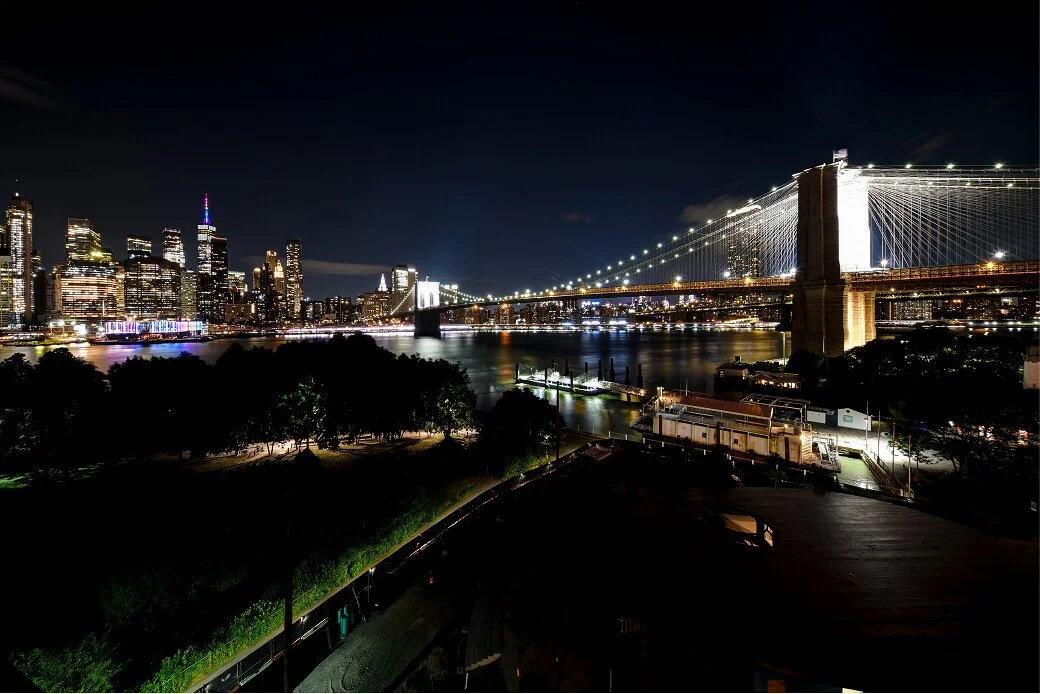
What Makes Urban Landscape Photography Different?
It's not quite architecture, and it's not quite street photography. Urban landscape photography lives somewhere between the two.
When I shoot architecture, I'm isolating a single structure, studying its details and proportions. Street photography lives in the moment, capturing a gesture or an expression that exists for a fraction of a second. Capturing urban landscapes asks for something different, which is what draws me to it so much.
In this genre, I’m looking at the whole environment. How buildings relate to each other. How light moves across concrete and glass at a specific hour. How people pass through a space without becoming the entire story. It's the ecosystem: infrastructure, weather, atmosphere, scale, all of it shaping the scene at once.
In urbex, I photograph what cities leave behind, but in urban landscape photography, I'm looking at what they're evolving into. And honestly, all that time spent in abandoned buildings has made me better at reading active ones. You start to see structure differently. You notice how spaces function, how elements connect, and where the tension lives between what was and what's trying to replace it.
Cities as Landscapes
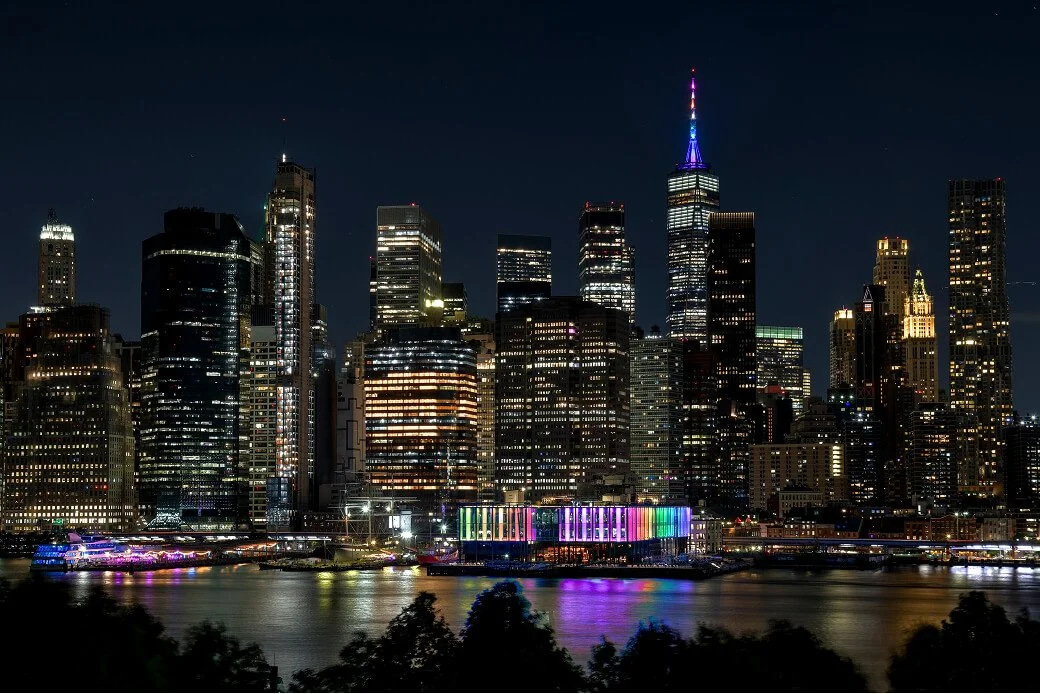
I approach urban environments the same way I approach natural landscapes. That means looking for layers, depth, and atmosphere. The difference is that here, those layers are built instead of grown.
A row of streetlights or a weathered curb can anchor the foreground. Mid-ground buildings stack and overlap like hills. Distant towers soften into the background, shaped by haze, weather, or light. The techniques are familiar; only the materials have changed.
Light is what brings it all together. The morning sun cuts clean lines through streets. Overcast skies flatten contrast and highlight form. Golden hour works its usual magic, warming steel and concrete instead of leaves and water. This is where the principles of symmetry in photography often appear naturally, in repeating windows or aligned streets that guide your composition.
Cities have their own rhythms, too. Rush hour feels dense and heavy. Early mornings and weekends can feel almost empty. All it takes is a little patience for the city to start revealing itself like any landscape would.
Finding Your Subject
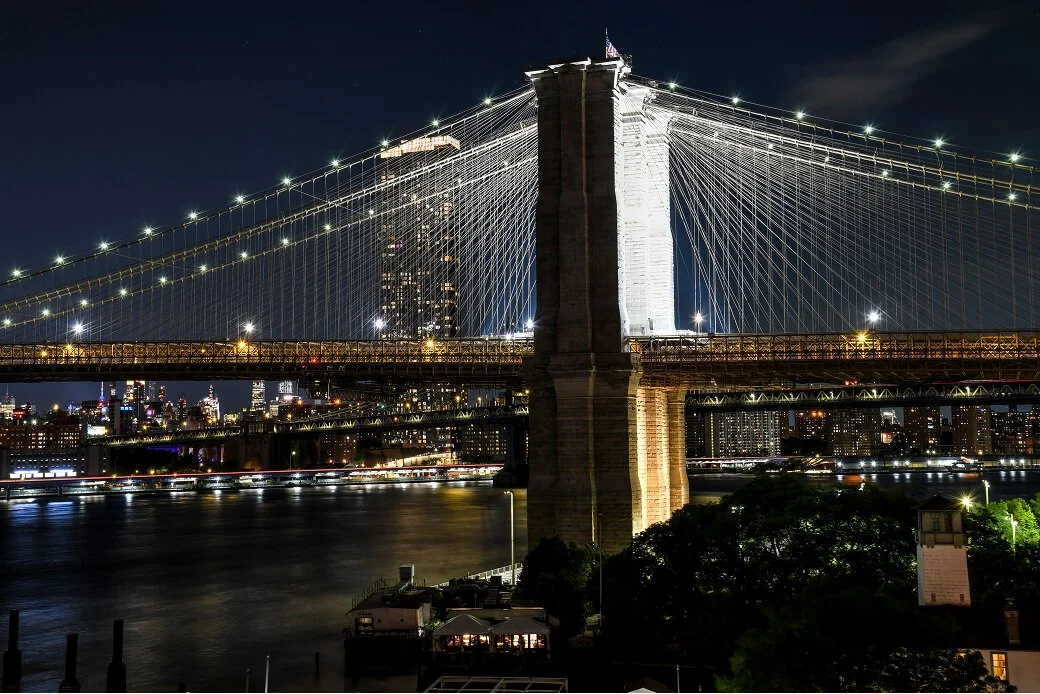
One of the biggest challenges in urban landscape photography is knowing where to aim your attention. Cities are visually dense, and that makes them overwhelming at first. But where you stand changes everything.
Elevated Vantage Points
I often start above the city. Shooting from rooftops, observation decks, bridges, or parking structures changes how I read a place.
From up high, patterns reveal themselves. The grid starts to make sense. Blocks repeat, parks break up density, and rivers or rail lines cut deliberate paths through the frame. I’m looking for layers here, where buildings rise and fall in height, where shadows add depth, and streets stitch everything together.
The trick is to seek out legal vantage points rather than abandoned accesses. Public overlooks and garages usually offer better, safer views if you take the time to explore. From that distance, the city reveals its underlying structure, something years of photographing abandoned environments taught me to notice.
Staying At Street Level
Elevation isn’t always the answer. Some of the most compelling urban landscapes happen on the ground, where scale and proximity are impossible to ignore.
At street level, I’m watching how the city organizes itself. Streets taper into the distance. Sidewalks repeat in patterns of trees, signs, and lampposts. Pedestrian flow and passing traffic introduce a steady rhythm, adding movement without becoming the point of the photograph.
People belong in these scenes, but not as subjects in the traditional sense. They function more like reference points. A lone figure crossing a wide intersection or standing at the base of a high-rise helps translate scale, reminding us just how large these structures really are.
I’m also drawn to the in-between spaces. Where industrial zones brush up against neighborhoods, train tracks split a block in half, or weeds push through cracked pavement. These transitional areas feel alive, familiar, and quietly revealing, much like the abandoned settings I’m usually drawn to.
Technical Tips for The Perfect Shot
The mechanics of urban landscape photography aren't complicated, but they do require a different approach than what you might be used to. In urbex, you can take your time. In active cities, everything moves faster.
Timing Is Everything
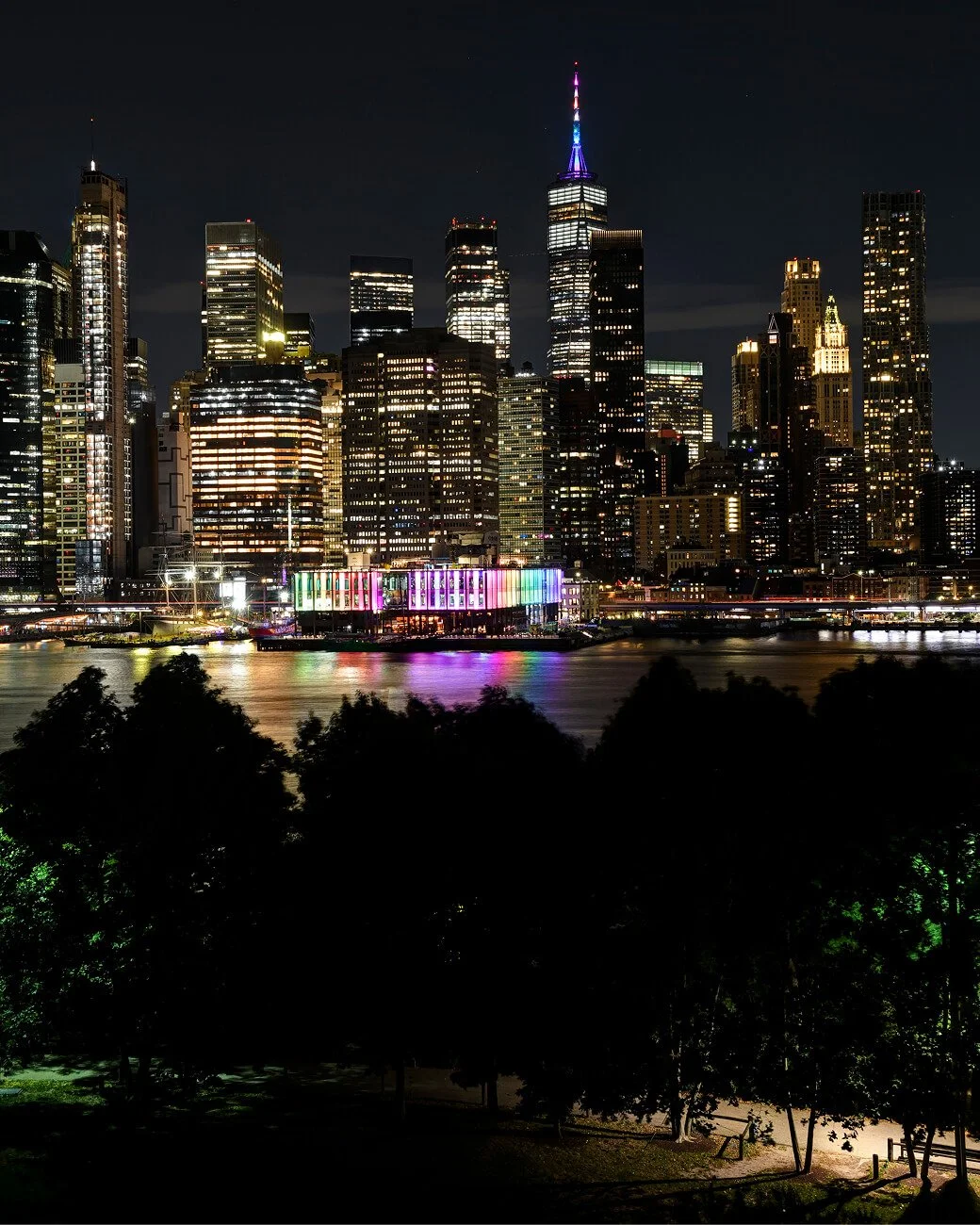
In cities, golden hour hits differently than it does anywhere else. Light catches glass and steel, bouncing between buildings, warming entire facades while the street below stays cool and dark. Blue hour is that narrow window when artificial lights and fading daylight balance perfectly. It doesn't last long, but the images from that stretch are often the ones I keep.
Midday, on the other hand, can feel tricky. Harsh shadows and stark contrast make the geometry of buildings feel sharper, almost sculptural. But sometimes that severity is exactly what the shot needs. And at night, cities become different subjects entirely. Light trails, illuminated windows stacked into patterns, and the hum of artificial light washes over everything.
How to Compose Your Shot
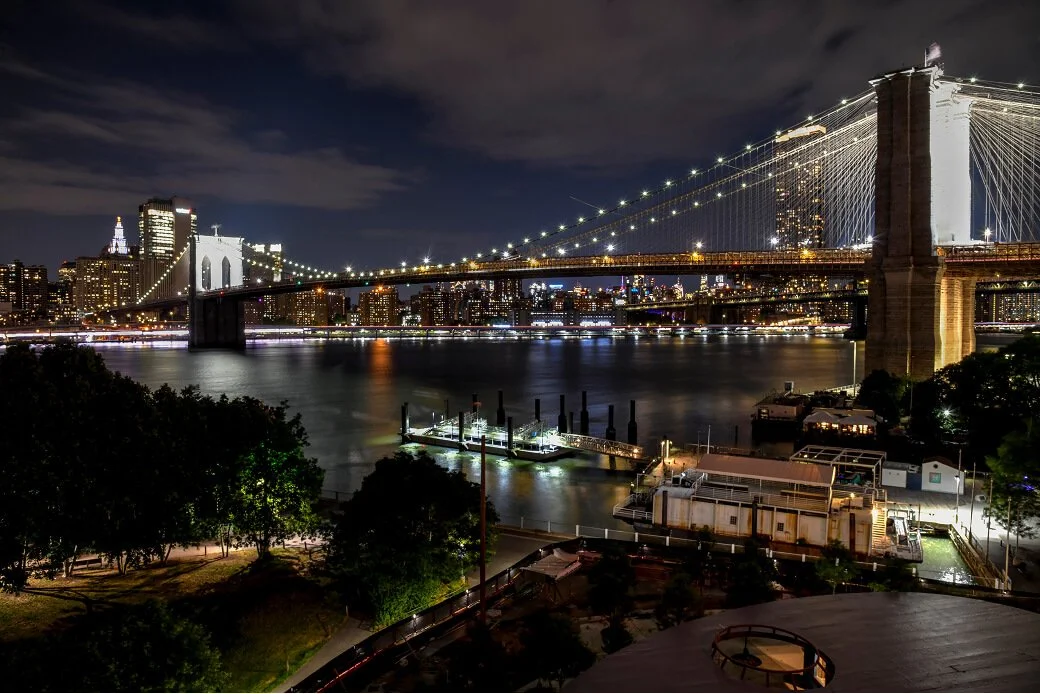
In urban landscape photography, architecture often becomes the frame. For instance, you could have an overpass that cuts through the top of the image, a bridge that pulls the scene forward, or perpendicular buildings that naturally contain a space.
Cities offer symmetry and chaos at the same time, and learning when to lean into each matters. Symmetrical compositions can bring calm to dense environments. Other times, allowing disorder to remain gives the image its energy.
Negative space is just as important. An open sky or empty stretch of pavement can add ease to a crowded frame. And I’m always thinking in layers (foreground, middle ground, background) because depth is what keeps a cityscape from feeling flat.
Essential Gear
Equipment can drastically alter your shot. Knowing what to reach for often makes the difference between capturing the moment and walking away wishing you had.
Here's what’s in my camera bag every time I head out:
Wide-angle lens for scale and context. It lets me show how a street unfolds or how a building relates to everything around it.
Telephoto lens for compression and detail. It pulls distant elements closer, and makes them feel more connected.
Tripods for long exposures. Light trails, motion blur, anything that requires the camera to stay still.
Filters to shape the light. A polarizer cuts reflections off windows and wet pavement. An ND filter lets me slow the shutter in broad daylight, turning moving traffic into soft streaks instead of frozen shapes.
The upside is that it’s much simpler than the equipment you need for urbex photography. There’s no protective gear to worry about, for example. It’s just you and your camera, and the tools that help you respond to what’s in front of you.
Final Thoughts
Urban landscape photography is about seeing cities as living environments. They’re shaped by movement, weather, time, and human use, constantly changing whether we notice it or not. When you approach a city the way you would a natural landscape, you start paying attention to how space functions, how light moves, and how different elements coexist within the same frame.
My background in urbex has shaped the way I see active cities. Spending years photographing decay taught me to recognize transition and the slow process of change that leaves marks everywhere. Those same forces are present in functioning urban spaces, just in a more visible, ongoing way. Construction beside collapse. Growth layered over history. Nature quietly reclaiming space where it can.
If you’re looking to explore urban landscape photography, start where you are. Walk familiar streets without a destination. Look for patterns, pauses, and shifts you’ve never noticed before. And trust me, you'll be surprised what shows up when you slow down long enough to see it.